
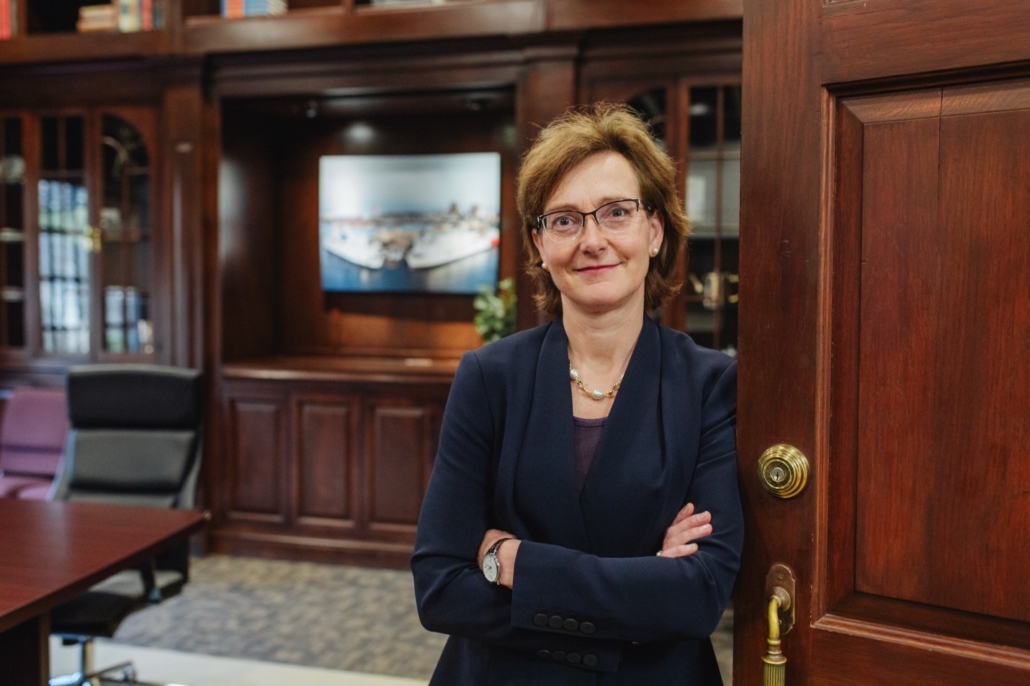
Dr. Michelle White is the Chief Executive Officer of Mercy Ships, bringing more than 20 years of experience as a medical and executive leader across clinical, academic, and global health domains. Most recently, as a Consultant Anaesthetist at Great Ormond Street Hospital in London (Europe’s leading paediatric hospital) she led complex, high-risk paediatric services including patients from the UK, Europe, and the Middle East.
Dr. White’s relationship with Mercy Ships spans nearly two decades. She first volunteered in 2005 and later served five years living onboard ships in Africa, including as Deputy Chief Medical Officer and as the founding leader of Mercy Ships’ Medical Capacity Building programme. In these roles, she helped guide the organisation’s strategic expansion from a focus on direct surgical care to a broader model of strengthening national health systems in partnership with African governments.
As Dr. White explains, “We believe patients everywhere deserve the same standards of safety and quality. Mercy Ships exists to model what is possible and to support systems in achieving that level of excellence.” This commitment is reflected within the dual focus of Mercy Ships, delivering high-quality surgical care while investing in long-term health system strengthening.
Holding a PhD in Global Surgery and Implementation Science from King’s College London, Dr. White has authored more than 70 peer-reviewed publications and is internationally recognised for her work in surgical safety, including speaking at the World Health Organisation Global Ministerial Patient Safety Summit in 2023. Deeply rooted in her Christian faith, she is known for servant leadership, cross-cultural collaboration, and a clear commitment to operational excellence.
Her leadership is shaped by years of direct experience alongside patients and healthcare professionals across Africa. Dr. White notes, “I care deeply about this work because I have seen, again and again, how access to timely surgical care can change the entire course of a person’s life, and how that change extends to families, communities, and future generations.”